
How Traffic Rescue Vehicles Save Lives During Highway Accidents in India

A highway accident changes everything within seconds.

One moment, traffic is moving normally. Next, vehicles stop, people gather around, confused, and someone is waiting for help to arrive. On busy Indian highways, these situations are becoming more common with increasing traffic movement, long-distance transportation, and expanding expressway networks.

This is where Traffic Rescue Vehicles are quietly becoming one of the most important parts of highway safety.

They are not just emergency vans parked for formality. These vehicles are designed to reach accident spots quickly, support rescue teams on the ground, clear blocked roads, and help injured people, before delays make the situation worse.

For highways where every minute matters, having the right response vehicle nearby can make a real difference.

Highway Emergencies Need More Than Basic Support

Most highway accidents are not simple situations.

A truck overturns in the middle lane. A vehicle gets badly damaged after a collision. Traffic starts piling up from both sides. People try to help, but there is confusion, panic, and very little coordination.

In these moments, normal roadside support is usually not enough.

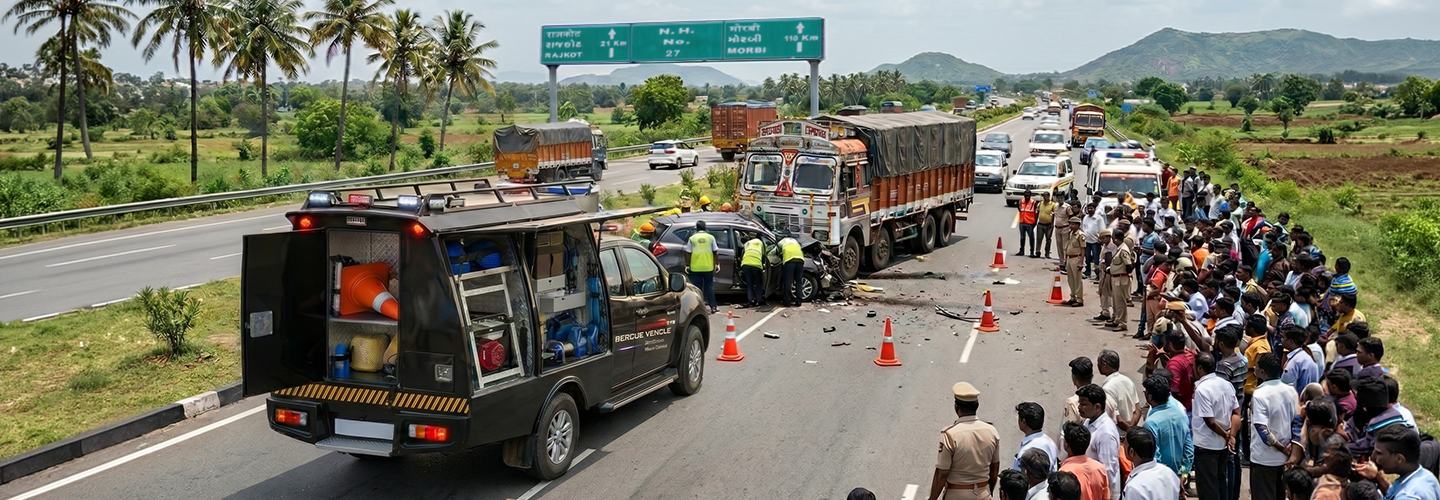
A dedicated Highway Rescue Vehicle is built specifically for these kinds of situations. It carries rescue equipment, safety systems, emergency lighting, recovery tools, and operational support needed during highway emergencies.

Instead of waiting for different teams and equipment to arrive separately, responders can begin work immediately from a single vehicle.

That speed matters more than most people realise.

Reaching the Accident Site Faster

One of the biggest challenges during highway accidents is response time.

Even when emergency teams are informed quickly, reaching the exact location is not always easy. Traffic congestion, poor visibility at night, and long highway stretches often delay assistance.

A properly equipped Highway Emergency Vehicle helps reduce this delay. These vehicles are designed for quick movement on expressways and can operate efficiently in difficult roadside conditions.

As First Responder Vehicles for Expressways, they help emergency personnel reach accident locations with the tools they already need on board.

Sometimes, a faster response is the difference between controlled rescue and complete chaos.

Helping Rescue Teams Work Safely

Not every accident can be handled with basic roadside assistance.

There are situations where passengers get trapped inside damaged vehicles or where recovery becomes difficult because of heavy impact. In such cases, rescue teams need proper equipment and enough working space to operate safely.

A modern Road Accident Rescue Vehicle is usually fitted with systems that support these operations, including:

  • Hydraulic rescue tools
  • Emergency lighting systems
  • Recovery winch
  • Stabilization support
  • Communication equipment

These setups help responders work faster without creating additional risk for victims or nearby traffic.

More importantly, they help bring some structure into situations that are otherwise extremely stressful.

Keeping Traffic Under Control

One accident on a highway can quickly turn into a much bigger problem.

When damaged vehicles block lanes and visibility reduces, the risk of secondary accidents increases immediately. Drivers approaching the scene often panic or brake suddenly, especially during nighttime or heavy traffic hours.

This is why a Rescue Vehicle for Highway Accidents is not only important for victims but also for overall traffic safety.

Warning lights, reflective systems, barricading tools, and traffic guidance equipment help create a safer working zone around the accident area. This allows emergency teams to do their job while reducing danger for other motorists on the road.

In many highway situations, controlling the scene properly is just as important as the rescue itself.

Why Quality in Rescue Vehicles Matters

During emergencies, there is very little room for failure.

Every equipment compartment, every lighting system, every recovery tool, and every An operational feature inside the vehicle needs to work properly under pressure.

That is why DHI Mobility plays such an important role in building a reliable emergency response systems.

These vehicles are designed keeping actual field conditions in mind, long operational hours, rough road environments, emergency handling requirements, and responder safety.

For government agencies, highway operators, and industrial sectors, investing in dependable rescue systems is not only about infrastructure. It is about being prepared and DHI Mobility’s Traffic Rescue Vehicle is ticking all these boxes and is mission ready.

Building Safer Highways for Everyone

India’s highways are growing rapidly, and with that growth comes greater responsibility.

Better roads alone cannot prevent every accident. But a better emergency response can reduce the damage that follows.

A dependable Emergency Rescue Vehicle helps emergency teams act faster, work safer, and manage difficult situations more effectively when time is critical.

And sometimes, that timely response is what brings someone home safely.

Because highway safety is not only about movement.

It is also about being ready when something goes wrong.
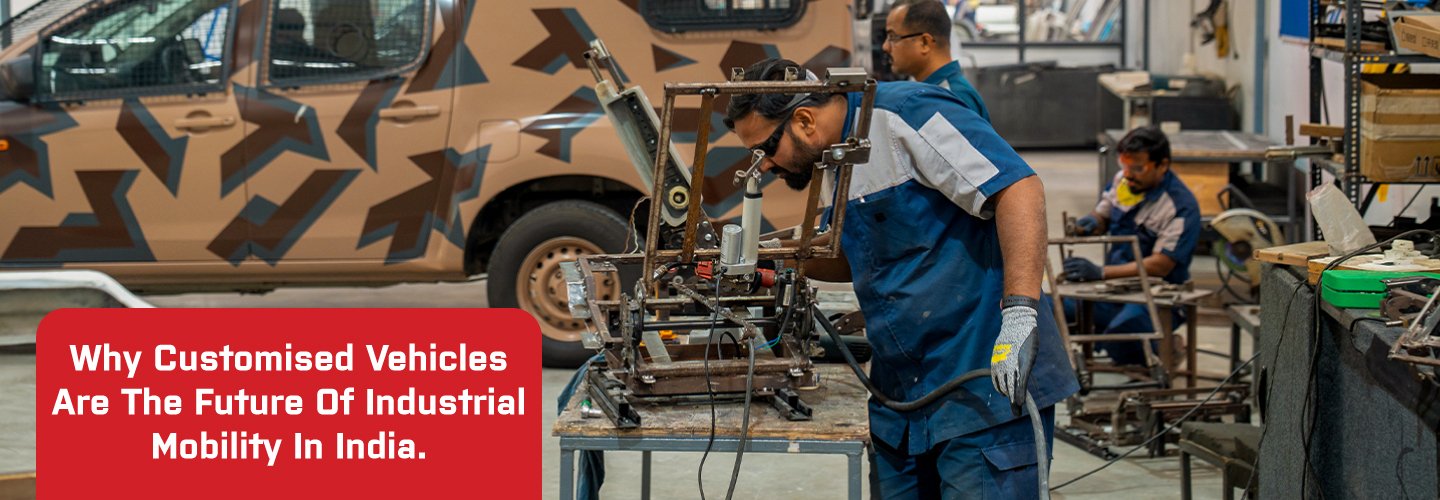
Why Customised Vehicles are the Future of Industrial Mobility in India.

India’s industrial landscape is evolving faster than ever. From infrastructure expansion and smart cities to defence modernisation and emergency response systems, one thing is becoming clear: Standard vehicles are no longer enough.

Industries today don’t operate in controlled environments. They operate in extremes, remote terrains, high-risk zones, time-sensitive missions, and unpredictable conditions. And that’s exactly where customised Special Purpose Vehicles (SPVs) are redefining mobility.

One Size Doesn’t Fit India

India is not a uniform market, it’s a complex ecosystem.
A vehicle designed for urban logistics cannot perform in a mining belt.
An off-the-shelf van cannot serve as a life-saving ambulance in remote regions.
A generic truck cannot meet defence-grade operational demands.
Customisation is no longer a luxury. It’s a necessity.

Custom-built vehicles are engineered for:
* Terrain-specific performance
* Industry-specific functionality
* Mission-critical reliability
They are not just vehicles.
They are purpose-built systems designed to perform.

The Shift: From Transportation to Capability
Industrial mobility is no longer about moving from Point A to Point B.
It’s about what the vehicle enables.
* A fire rescue vehicle isn’t transport, it’s a response system
* A defence vehicle isn’t mobility, it’s strategic readiness
* An industrial utility vehicle isn’t logistics, it’s productivity infrastructure
Customised SPVs transform vehicles into operational assets, not just machines.


Why Customised Vehicles Are Gaining Momentum

1. Increasing Complexity of Operations
Industries are becoming more specialised.
Whether it’s disaster response, airport ground handling, or border surveillance, each use case demands a tailored solution.

2. Demand for Efficiency & Speed
Time-sensitive environments need vehicles designed for quick deployment, optimized layouts, and functional integration.
Customisation reduces:
* Operational delays
* Human dependency
* Inefficiencies in execution

3. Safety is Non-Negotiable
In sectors like defence, mining, and emergency services, safety cannot rely on generic designs.
Custom vehicles integrate:
* Reinforced structures
* Advanced control systems
* Application-specific safety mechanisms

4. Technology Integration
Modern mobility demands:
* IoT-enabled tracking
* Smart control systems
* Communication integrations
Custom-built platforms allow seamless integration of future-ready technology.

India’s Growth Demands Purpose-Built Mobility
India is investing heavily in:
* Infrastructure
* Defence capabilities
* Public safety systems
* Industrial expansion
This growth cannot be supported by outdated, standardised mobility solutions.
It requires:
Flexible. Scalable. Custom-built vehicles designed for Indian realities.
From rural terrains to urban congestion, from deserts to dense forests, India needs vehicles that are built for the mission, not the market shelf.

The Role of Special Purpose Vehicle Manufacturers


This is where DHI Mobility plays a critical role.

By combining:
* Engineering precision
* Deep industry understanding
* Custom design capabilities

They create vehicles that:
* Adapt to real-world challenges
* Enhance operational efficiency
* Support critical missions across sectors
From defence and homeland security to industrial and emergency applications, customised vehicles are becoming the backbone of modern mobility infrastructure.

How DHI Mobility is Redefining Quick Response in Disaster Relief

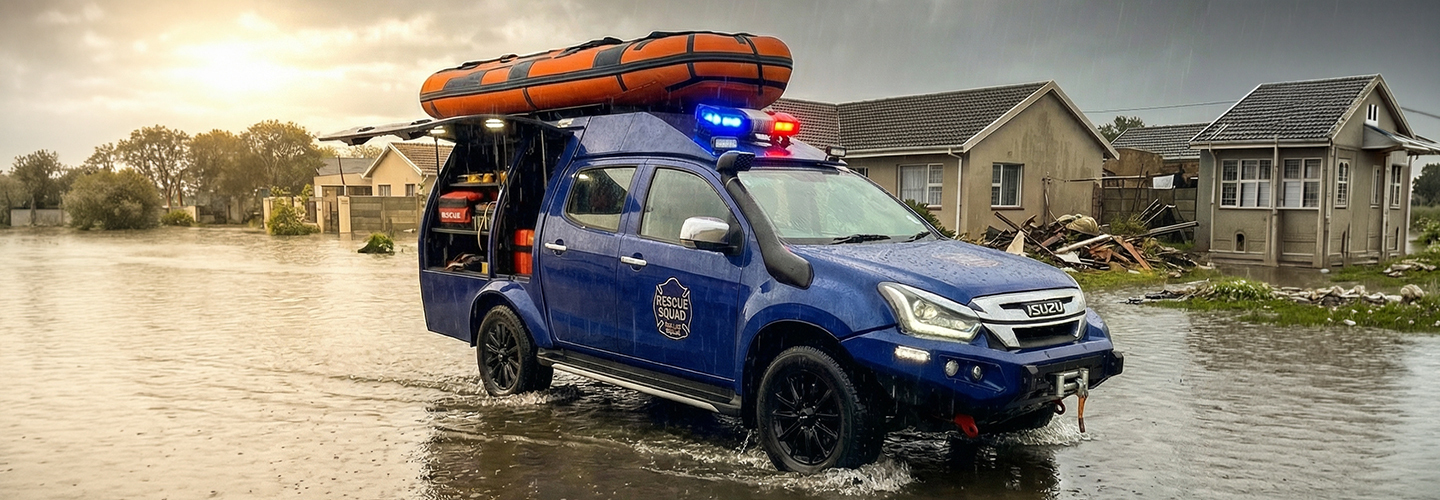
In disaster situations, response systems are only as strong as their ability to reach. Terrain breaks down first, roads disappear, surfaces weaken, and access becomes uncertain. Teams may be ready, but without the right mobility, response slows at the most critical moment.This is where DHI Mobility positions itself differently. It does not treat mobility as a support function, but as the foundation of response itself, especially when time, terrain, and urgency collide.

Not One Vehicle, A Response Ecosystem

What sets DHI Mobility apart is a structured lineup designed around real-world scenarios.From Troop Movement Vehicles built for rapid deployment in sensitive zones, to Riot Control Vans designed for controlled urban intervention, each platform addresses a specific operational gap. The Quick Response Vehicle (QRV) focuses on agility and immediate deployment, while Interceptor Vehicles ensure high-speed monitoring and control over extended routes.Alongside these are operational support systems, Rescue Vehicles equipped for disaster environments, Fire Tender solutions for confined fire emergency response, and Mining or Safari vehicles built for extreme terrains. Each vehicle fits into a broader response framework.The approach is simple: different situations require different capabilities, but all require reliability in movement.

Built Around Real Conditions, Not Assumptions

Across all vehicles, DHI Mobility follows a consistent engineering philosophy- adaptability over assumption.Whether it is hydraulic-enabled stability, modular storage for mission-specific equipment, or reinforced structures for unpredictable environments, every element is designed to function in conditions where standard vehicles begin to fail.Lightweight troop carriers enable quick ingress and egress. Enclosed riot vehicles ensure safety without compromising visibility. Rescue units carry heavy equipment without losing terrain control. Even high-speed interceptors are built to maintain stability over long, demanding patrol routes.The focus is not just on performance, but on sustained performance under stress.

Redefining What “Quick Response” Means

Quick response is often reduced to speed. DHI Mobility expands that definition.It is about reaching without interruption, operating without risk escalation, and adapting without delay. It means communication that doesn’t drop when networks fail, coordination that doesn’t stop when environments turn hostile, and mobility that doesn’t falter when infrastructure is damaged or missing.Whether in disaster zones, urban unrest, or remote terrains, the goal remains consistent: to ensure that response systems do not pause when conditions change, and that teams on the ground remain connected, informed, and effective.In the end, disaster relief is not limited by intent or effort. It is limited by access, and DHI Mobility is built to remove that limitation, so that those who are ready to help are never held back by the inability to reach those who need it most.